 How to charge the device
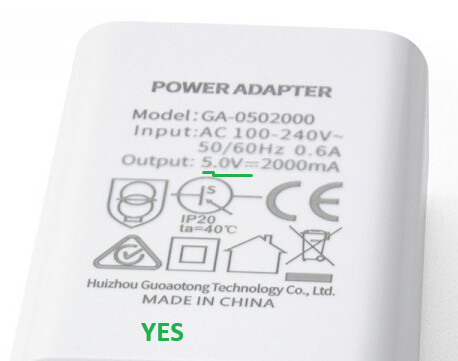
Use only a standard 5 V USB power source, such as:
-
A basic USB-A wall charger
-
A power bank
-
A USB port on a computer or laptop
These provide a fixed 5 V output and are compatible with the device.
 What NOT to use
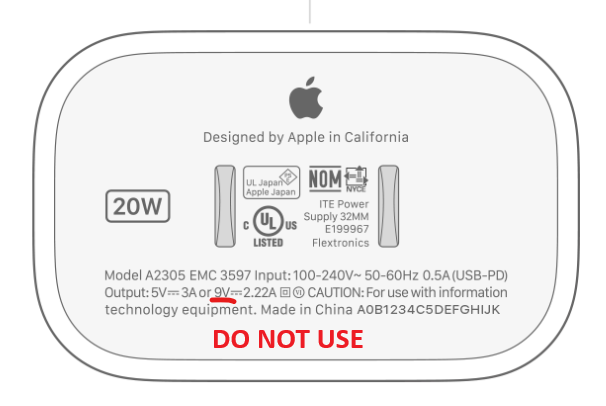
Do not use the following chargers:
-
Fast chargers
-
USB-PD (Power Delivery) chargers
-
Laptop chargers
-
“Quick Charge”, “SuperVOOC”, or similar high-power chargers
Although these chargers often use a USB-C connector, they may output higher voltages (up to 20 V) and are not compatible with standard 5 V devices.
 Important warning
Using an incompatible charger may:
-
Prevent the device from charging
-
Cause erratic behavior
-
Permanently damage the charging circuitry
For safety, the device is designed to reject incompatible chargers rather than risk damage, but not all chargers behave correctly.
Damage caused by incompatible chargers or power sources is not covered under warranty.
If you are unsure whether a charger is suitable, do not plug it in — ask us first.
Why is this necessary?
USB-C is a connector standard — not a voltage standard.
Many modern “fast chargers” support multiple voltages and rely on electronic negotiation to decide what voltage to output. Phones and laptops actively negotiate this process.
However:
-
This device is designed for simple, fixed 5 V charging
-
Many low-cost or poorly designed fast chargers do not correctly follow USB standards
-
Some chargers output higher voltages continuously, even when they should not
Because of this, a charger that works perfectly with a phone can still be incompatible with smaller electronics.
To reduce failures and improve reliability, we require the use of known-good standard 5 V chargers and do not include charging accessories in the box.
This approach is now common across the electronics industry and significantly reduces unnecessary damage and warranty issues.
About higher-voltage chargers
Some chargers may output higher voltages (such as 9 V) that appear to work initially.
While the device may begin charging, higher voltage causes excess heat and can lead to premature or permanent damage to the charging circuitry and battery.
This damage may not be immediate and may occur over time.
For this reason:
-
Only 5 V charging is supported
-
Higher-voltage charging is not safe
-
Damage caused by excess voltage or heat is not covered under warranty
TL;DR
USB-C ≠ 5 V
Use a simple USB-A charger, power bank, or PC USB port.
Fast chargers are not compatible.
If in doubt, check the charger label. If it says anything other than Output: 5VDC, it is the WRONG charger.